Kickback
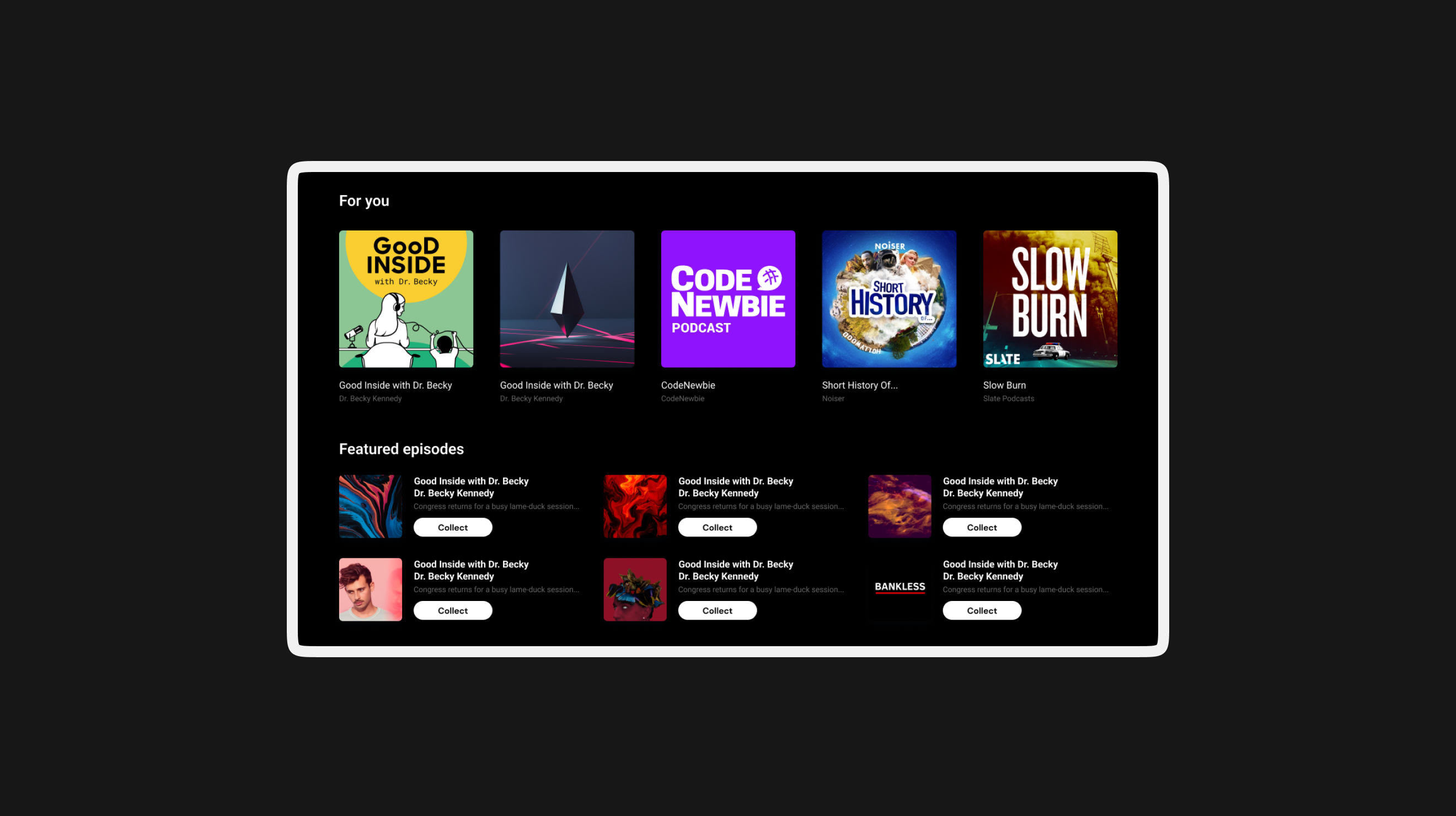
NFT & Web3 based podcast player for deeper creator monetization
Timeline • Role
April 2022 - February 2023 • Personal Project
Problem
Podcasting is one of the most intimate media formats ever created. Fans listen for hours a week, feel genuine connection to hosts, and show up reliably for years. And yet the monetization infrastructure for most podcasts is embarrassingly thin — pre-roll ads and Patreon tiers that convert a fraction of a passionate audience. The industry had been underselling itself for a decade.
Solution
By building a podcast player on NFT and Web3 rails, Kickback gives creators a meaningful way to deepen and monetize the relationships they've already built — turning passive listeners into invested participants.
Part 1: Understanding the problem
I immersed myself in the intersection of podcasting and Web3, including direct involvement with several crypto-native podcasts. The pattern I found was consistent: even the most dedicated podcast audiences had very few ways to express their fandom beyond listening. There was no ownership, no rewards for longevity, no mechanism for co-creation. For creators, that translated directly to revenue left on the table. The infrastructure existed to change that — it just hadn't been applied thoughtfully to this space.
Part 2: Coming up with ideas and solutions
The brainstorm centered on bridging audience passion and creator economics. Ideas explored included tokenized listener participation — rewarding engagement with on-chain credentials — NFT collectibles tied to milestone episodes, subscriber reward programs, and direct fan-host interaction mechanics that existing platforms simply didn't support. Each idea was evaluated against one filter: does this create genuine value, or is it just crypto for crypto's sake?
Part 3: DECIDING + PROTOTYPING
The single biggest design challenge was abstraction. Web3 technology is legitimately complex — wallets, gas fees, chains, signing transactions — and exposing that complexity to a mainstream audience would have killed adoption immediately. The prototype was built around one north star: the value proposition had to be immediately legible, and the blockchain had to be invisible. Visual design emphasized a clean, familiar podcast-player interface. The Web3 layer surfaced only when it created delight — never when it would create friction.
Part 4: ROUND OF TESTING AND IMPROVEMENTS
Creator and listener feedback confirmed the abstraction-first approach. Users responded to the rewards and ownership mechanics enthusiastically when they didn't have to understand the underlying technology to engage with them. The final product leaned into progressive disclosure: casual listeners could enjoy Kickback without ever touching a wallet; power users could go deeper when they chose to. The result was a clean design that made the value of Web3 feel obvious rather than intimidating.
Reflections
The biggest lesson from Kickback wasn't about Web3 — it was about any emerging technology. Whether you're building on crypto, AI, or whatever comes next, the designer's job is always the same: make the value obvious, make the complexity disappear. The tech is the means. The experience is the product.
Screens13
Desktop
Mobile